Robust representations of multimodal neural and medical signals
Institute of Computer Vision, College of Computer Science and Technology, Zhejiang University of Technology
We ask why a model fails when the subject, the recording device or the recording session changes, and how to prevent that failure. Real observations carry three defects: missing data, misaligned channels and distribution shift. Instead of patching them with hand-tuned preprocessing that only fits the data it was tuned on, we build their handling into the model itself, so that the space in which the model represents its input — the latent space — does not change with acquisition conditions.
Current direction: robust EEG feature extraction under multimodal constraints — using microscopic neural recordings (calcium imaging, ECoG) during training to constrain the EEG latent space, so that brain–computer interfaces stay reliable across people and sessions while needing only EEG at inference.
Figures as of September 2026.
Research
1 · Why the latent space is not robust
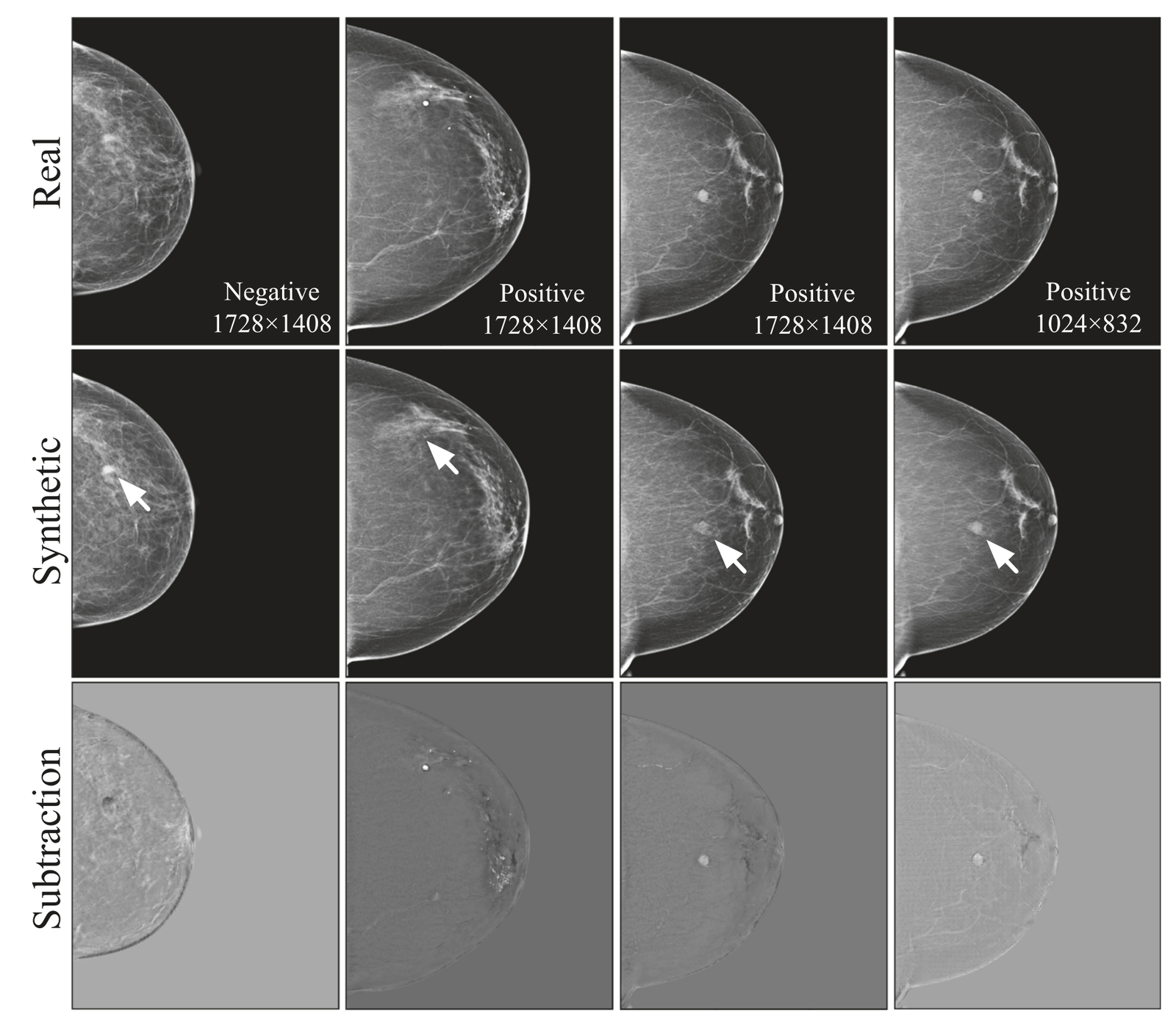
A machine-and-human reader study (Nature Communications, 2021, first author) used a generative adversarial network to change only the lesion region of mammograms....
Read more →2 · A robust latent space within one dataset
In a feed-forward network the designer controls three things: the architecture, the activation function and the loss. We let each layer choose its own activation...
Read more →3 · Stable across hospitals and time points
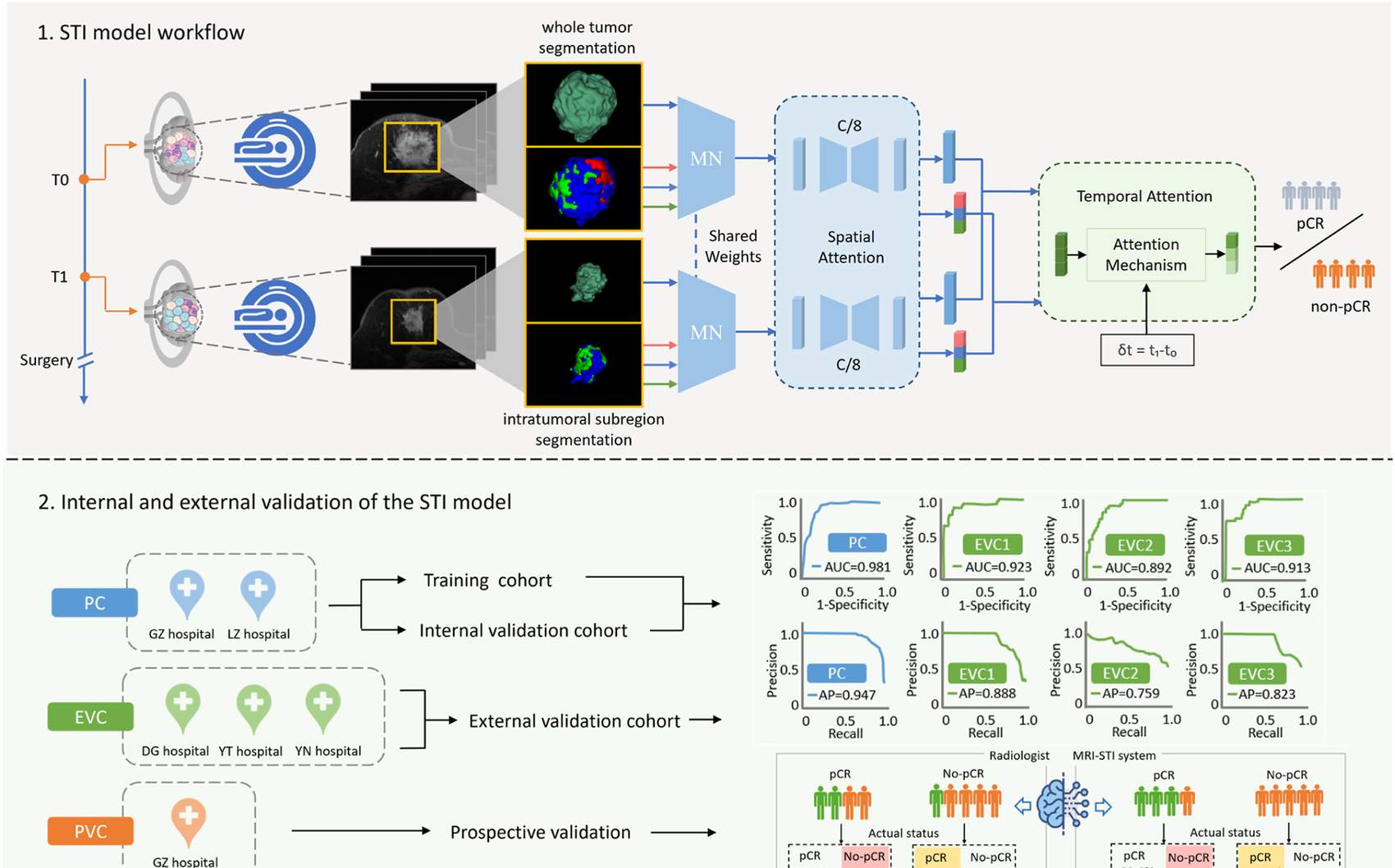
A multicentre study (eClinicalMedicine, 2025, co-corresponding author; master's student Chen Jin co-first author) predicts the response of breast cancer to...
Read more →4 · Stable across people
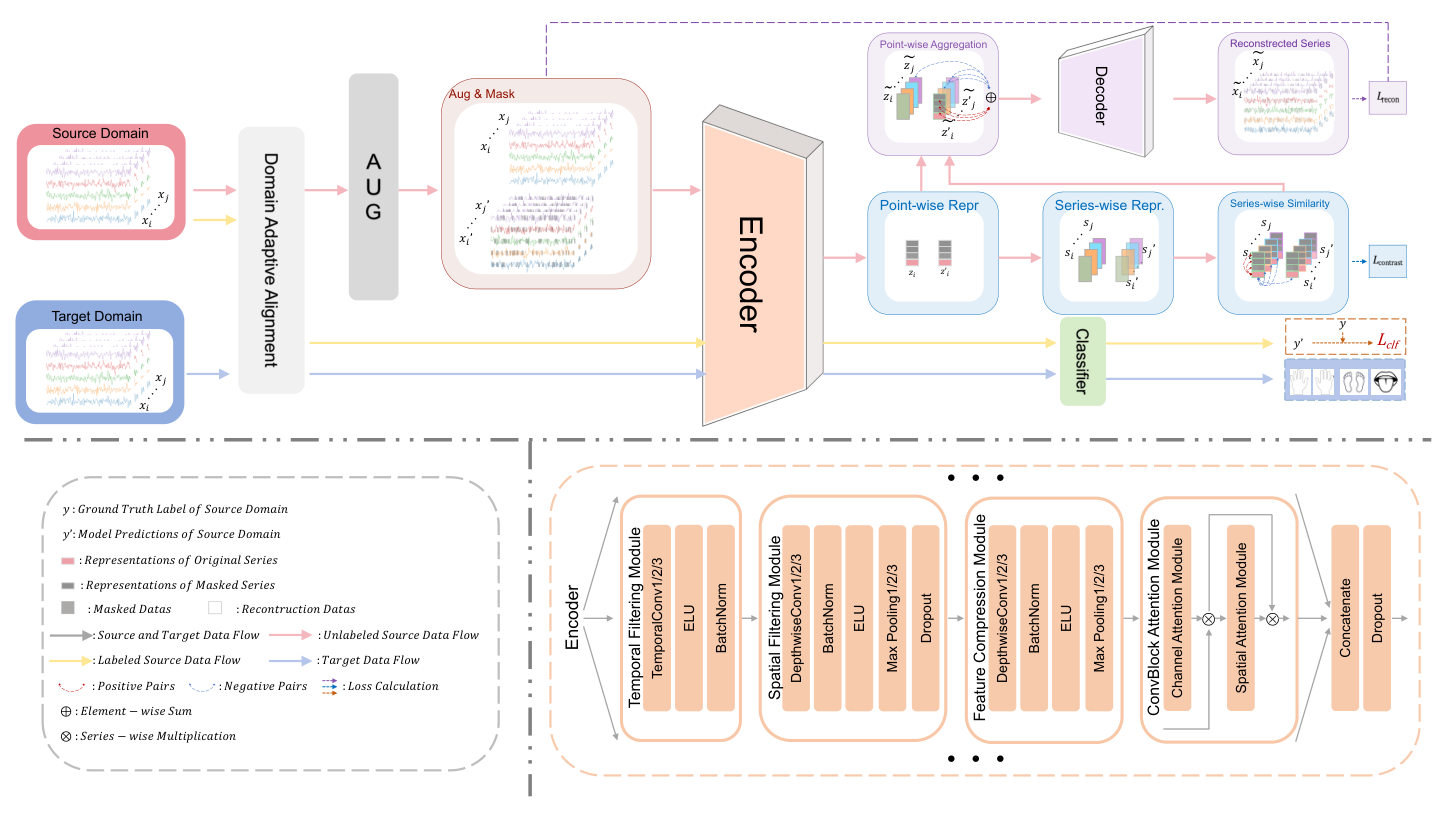
EEG differs greatly between people, which keeps brain–computer interfaces from practical use. Ph.D. student Kunkun Zhang proposed a masked self-supervised contrastive...
Read more →Featured papers
Try our models
Four of our deep-learning models run on the lab GPU. Upload de-identified images and get the result in seconds; nothing you upload is kept.
Join us
We welcome students, researchers and partners who want to make AI models that keep working when the data change. Come to study with us, do research with us, or bring a problem from your clinic, lab or company.
News
-
Online EEG adaptation paper in IEEE TIM
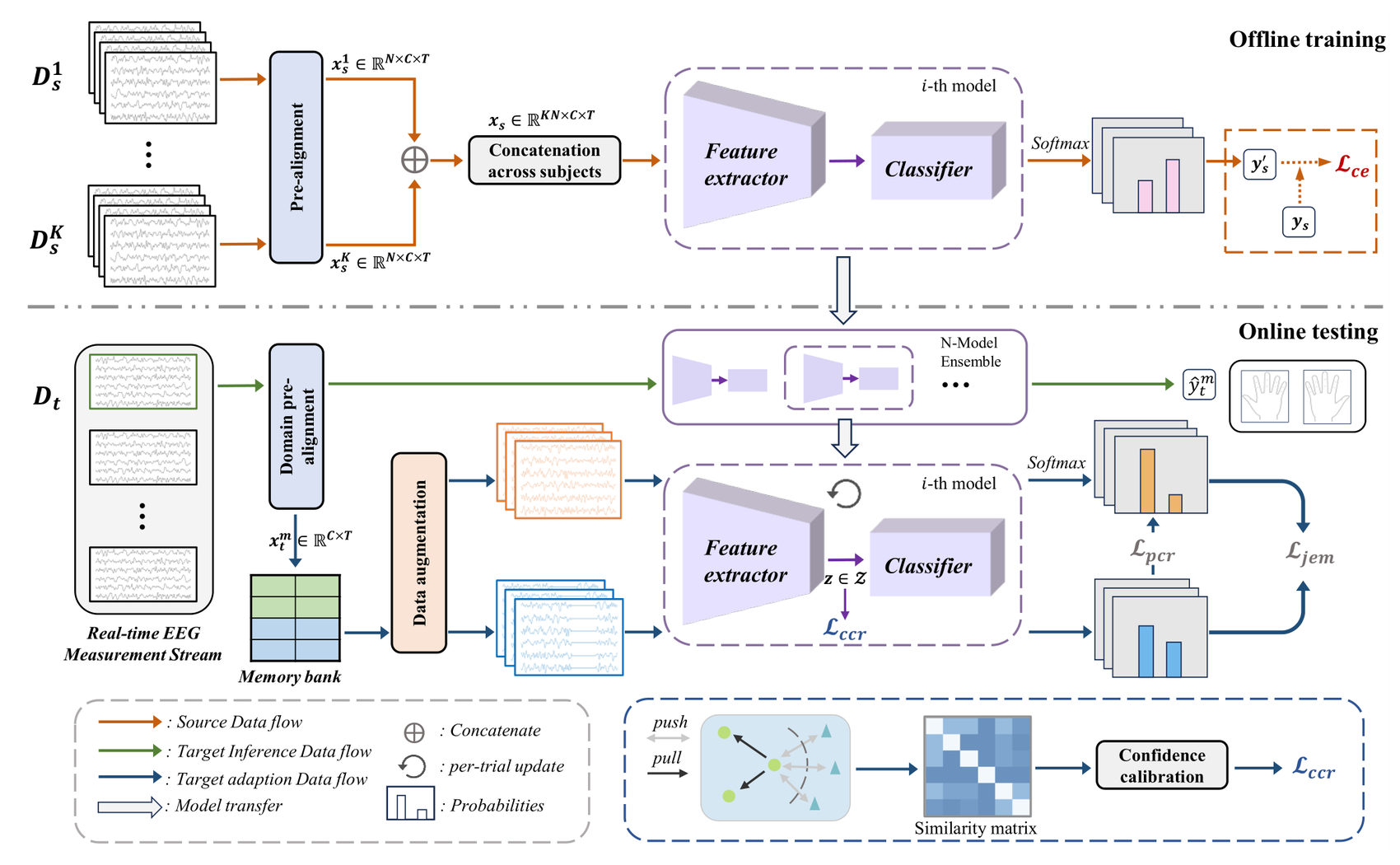
Ph.D. student Kunkun Zhang's online test-time adaptation method for cross-subject EEG decoding was published online in IEEE Transactions on Instrumentation and Measurement (2026, 75: 4015112). -
Seven graduates in 2026
Jingshan Hong received his Ph.D.; Haixin Shen, Chen Jin, Kehao Wu, Zhitao Chen, Jiayi Shen and Kai Zheng received their master's degrees. Congratulations! -
Poster at the Weill Cornell Anesthesiology Research Expo
The PI presented cross-scale cortical recordings at the department's 17th annual research expo in New York. -
Preprint: paradoxical discharges after suppressing excitatory neurons
Co-first-author preprint on bioRxiv (doi:10.1101/2025.10.02.676593) with the Liou, Schevon and Schwartz labs. ↗ -
Opening talk of the VAPORS seminar series
The PI gave the first talk of the academic year in Weill Cornell Anesthesiology's VAPORS seminar: "Excitation/Inhibition imbalance is a common hallmark of anesthetic-induced unconsciousness". -
Early prediction of chemotherapy response in eClinicalMedicine
The multicentre MRI spatiotemporal interaction model (1,044 patients, 5 centres; external AUC 0.892–0.923) was published in eClinicalMedicine (2025, 85: 103298). Try it on the Demo page.
Recent publications
- DD-Net: A defect detection model for carbon fiber-reinforced thermoplastic prepreg surface
J Hong, H Hu, H Zhang, K Song, Q Zhou. Measurement, 2026. student first author - TiMoS-Net: a multi-temporal image and morphological spatial feature fusion network for predicting neoadjuvant chemotherapy response in breast cancer
C Jin, S Chen, H Shen, W Tang, Y Chen, J Xiao, Y Guo, Q Zhou. Biomedical Signal Processing and Control, 2026. student first author - A self-guided few-shot semantic segmentation model based on query foreground-background similarity
J Hong, H Hu, X Chen, K Ai, Q Zhou, X Zhang. Information Processing & Management, 2026. student first author - Memory-augmented online test-time adaptation for EEG motor imagery via perturbation consistency and confidence calibration
K Zhang, K Wu, Z Chen, H Hu, Q Zhou. IEEE Transactions on Instrumentation and Measurement, 2026. student first author - RMFDNet: Redundant and missing feature decoupling network for salient object detection
Q Zhou, J Wang, J Li, C Zhou, H Hu, K Hu. Engineering Applications of Artificial Intelligence, 2025. - Development and validation of an MRI spatiotemporal interaction model for early noninvasive prediction of neoadjuvant chemotherapy response in breast cancer
W Tang, C Jin, Q Kong, C Liu, S Chen, S Ding, B Liu, Z Feng, Y Li, Y Dai, et al. EClinicalMedicine, 2025.